Find out why it isn’t post‑quantum. Fix it. Prove it.
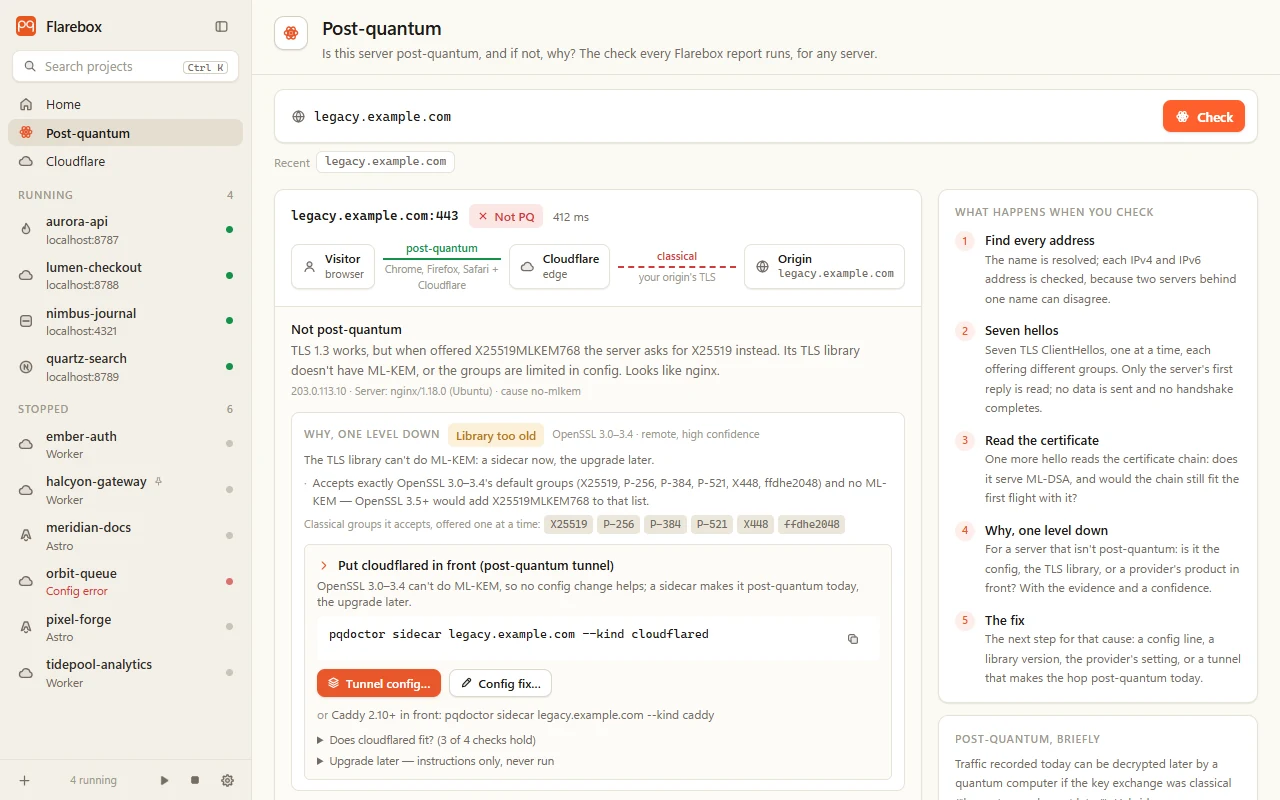
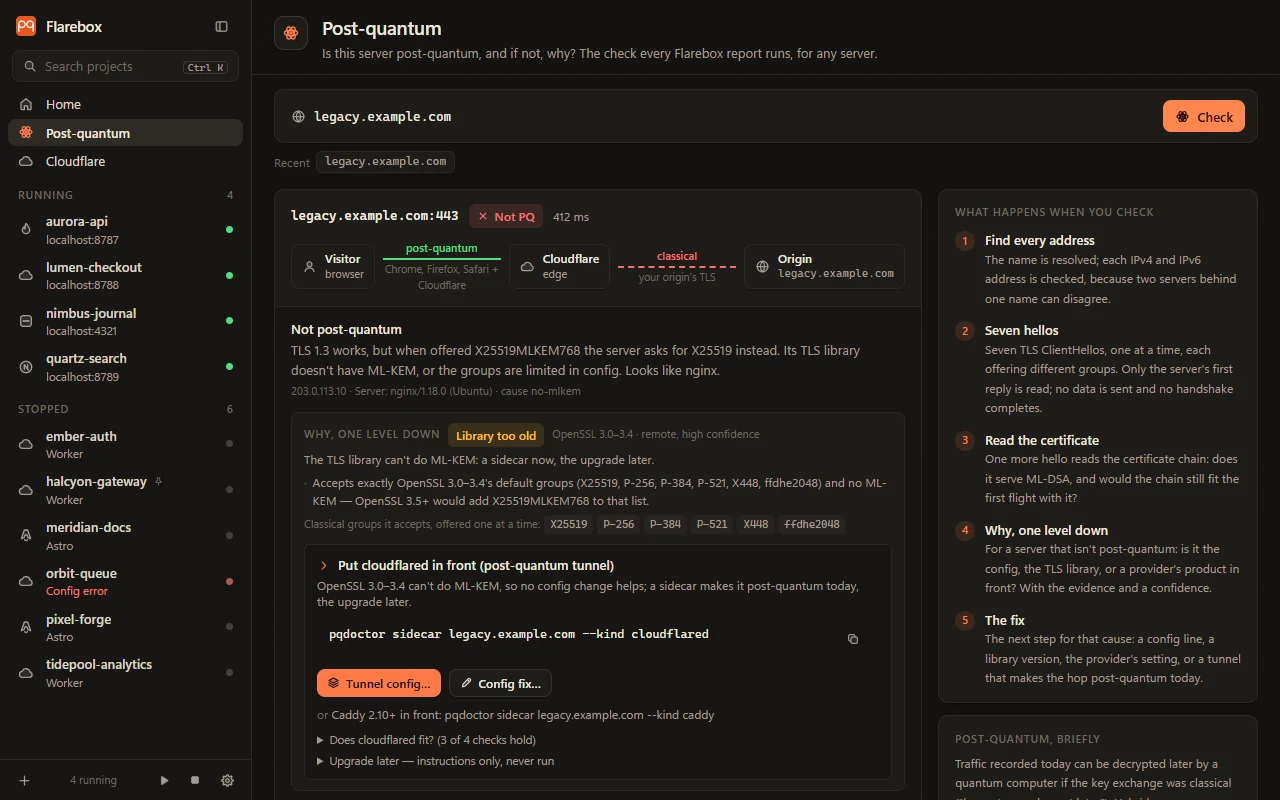
pqdoctor checks any server for hybrid ML-KEM key exchange, names the exact cause when it’s missing, and fixes it. Flarebox puts it in a desktop app and runs it across every origin behind your Cloudflare zones.
pqdoctor 0.5.1 for Windows, macOS, Linux · Flarebox 0.3.0 for Windows, Linux
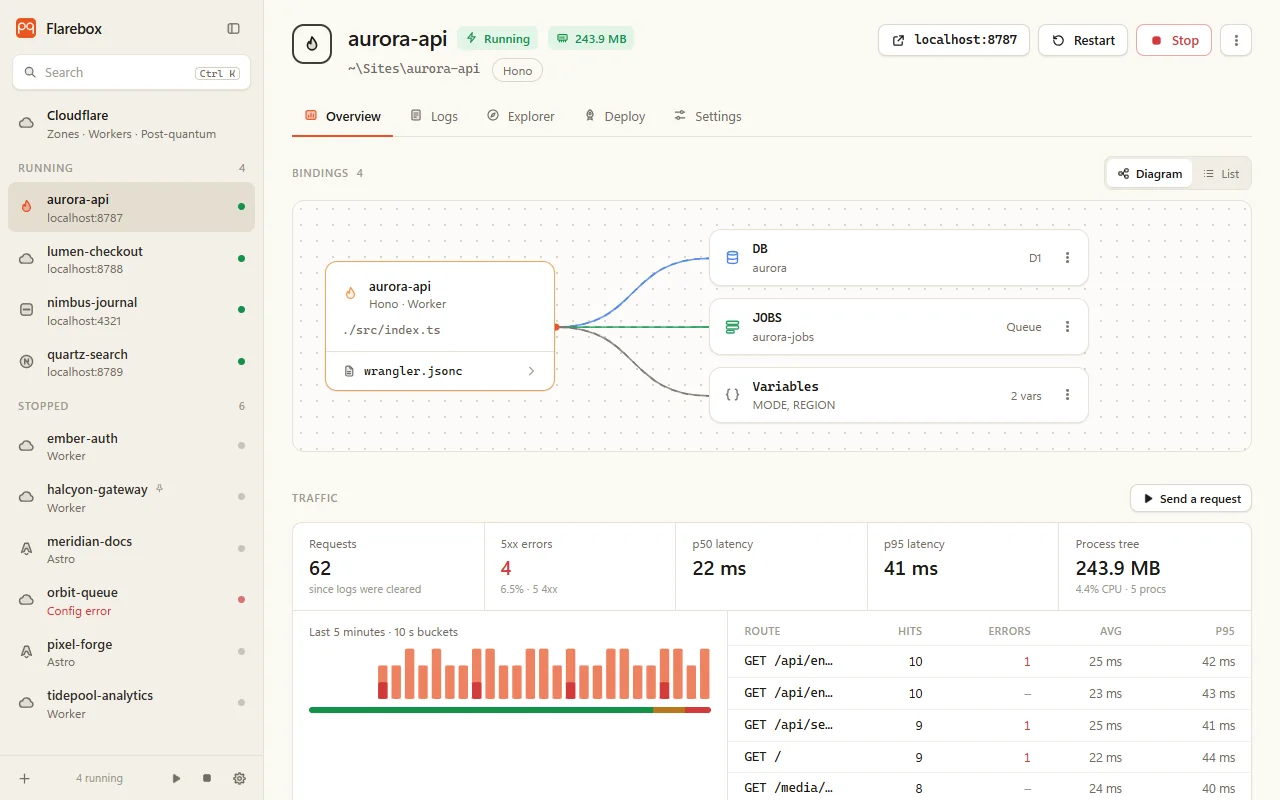
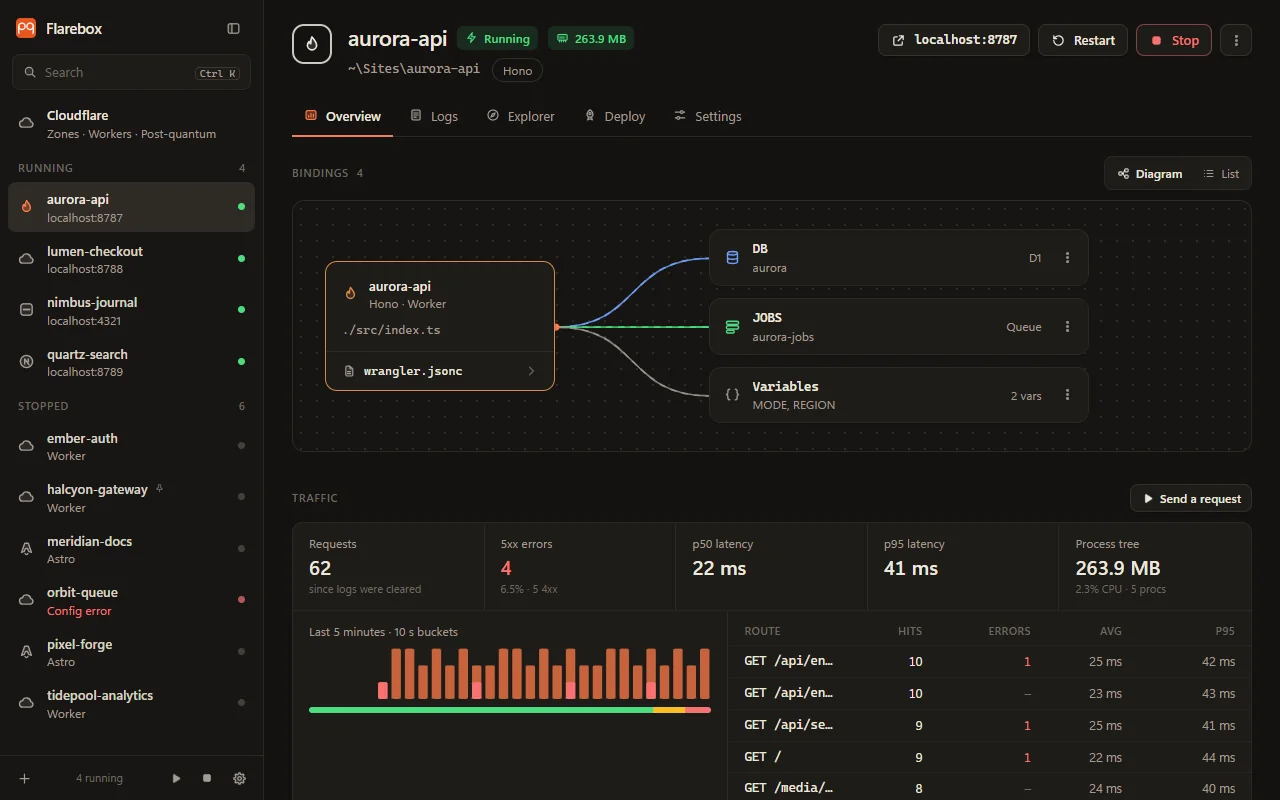
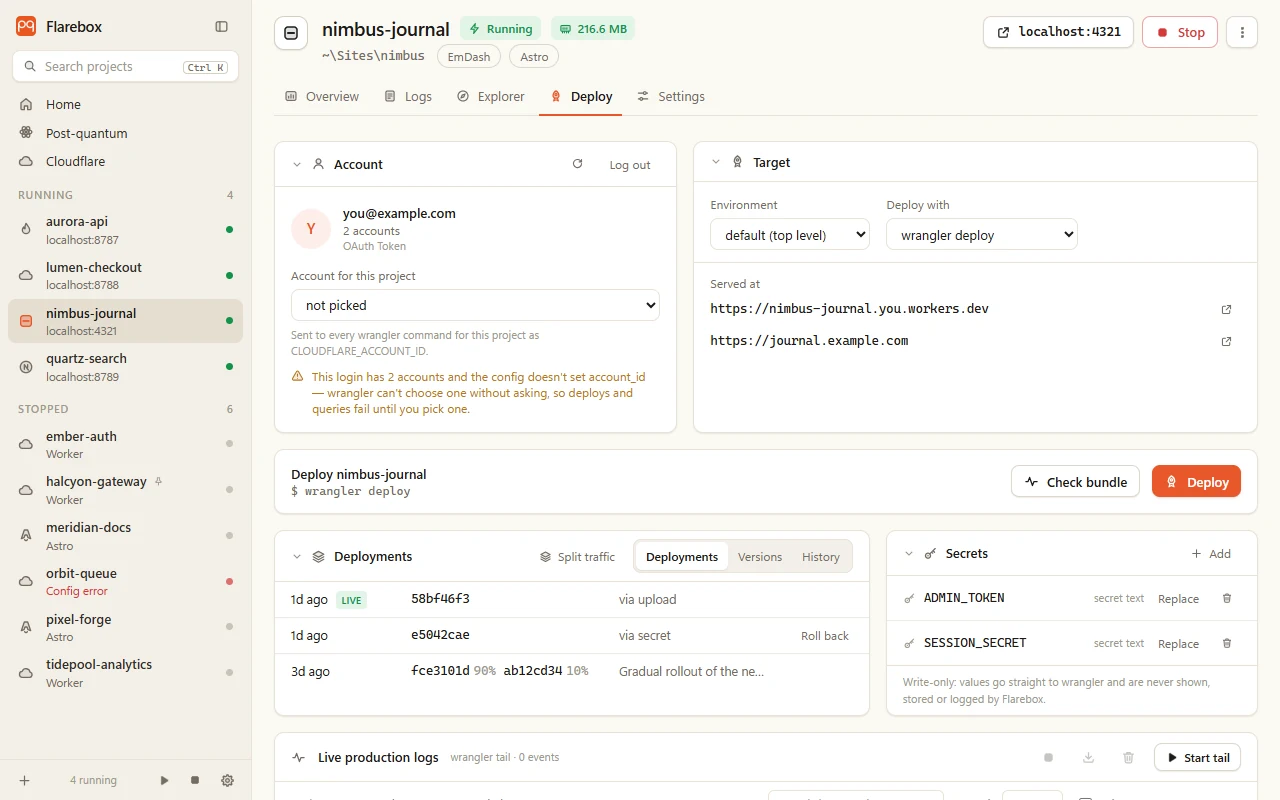
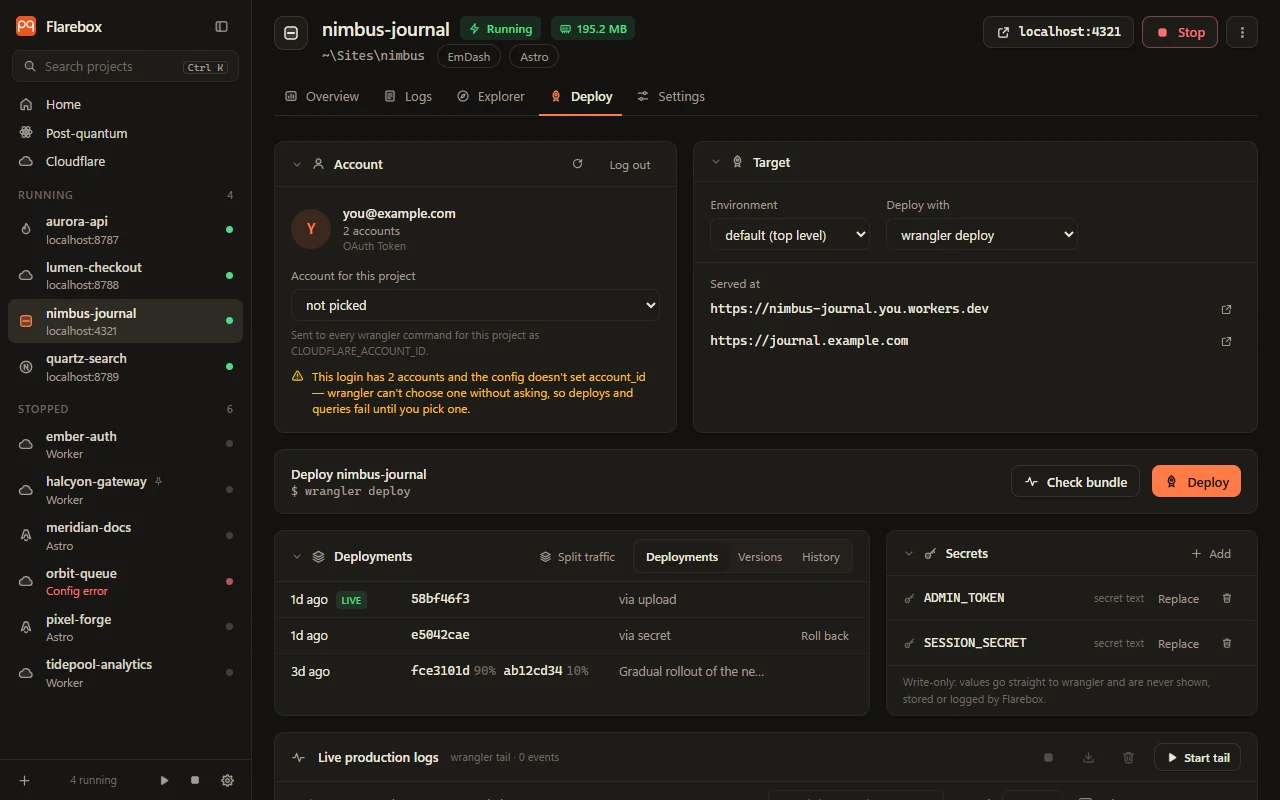
Flarebox
Terminal
$pqdoctor github.com✘ github.com:443(140.82.114.4)Not post-quantum TLS 1.3 works, but when offered X25519MLKEM768 the server asks for X25519 instead.cause:no-mlkemFixes 1. Upgrade the TLS library under the server Groups = X25519MLKEM768:X25519:prime256v1$
$pqdoctor nginx.org✘ nginx.org:443(3.147.99.198)Not post-quantum: TLS 1.2 only The server doesn’t speak TLS 1.3, so it can’t do hybrid ML-KEM.cause:tls12-onlyserver: nginx/1.31.3Fixes 1. Turn on TLS 1.3 ssl_protocols TLSv1.2 TLSv1.3;$$pqdoctor cloudflare.com✔ cloudflare.com:443(104.16.133.229)Post-quantum: negotiates X25519MLKEM768 Supports and prefers hybrid ML-KEM key exchange.cause:pq-preferredserver: cloudflare$Real output, 2026-10-15
59 / 59same answer as OpenSSL 3.5 on every real site it could decide
30 / 30faulty lab servers diagnosed right, and every printed fix worked
4,616origins in the Tranco top 10k measured, cause by cause
25.5%of them negotiate post-quantum today. The rest is what pqdoctor is for
How it works
From the first check to proof
One engine, six steps. Each one is a command in pqdoctor and a screen in Flarebox.
01
Find
Check any TLS, QUIC, mail or SSH server, or scan thousands. Every address behind a name, CDN edges told apart.
pqdoctor scan hosts.txt
02
Explain
Seven handshake-only probes name the cause: an old TLS library, a hand-set curve list, TLS 1.2 only, Kyber draft, a middlebox.
cause: no-mlkem
03
Fix
The config line for your stack, applied with a backup, a test, a reload and a re-check. Rolled back if it fails.
pqdoctor fix --stack nginx
04
Protect
Can’t upgrade the server? A post-quantum TLS proxy in front of it: HTTP, TCP, UDP, HTTP/3, mail, keys in an HSM.
pqdoctor proxy
05
Prove
Every hop of the path checked, not just the front door, with signed evidence and a plan for what is left.
pqdoctor assure
06
Monitor
A daily re-check, alerts when something drops back to classical, history, a CBOM and a one-page readiness report.
pqdoctor agent install
Fixes written fornginxApacheHAProxyCaddyNode.jsGoJavaIIS / SchannelPostfix and DovecotcloudflaredFixes by server →
The same engine as the CLI, plus your Cloudflare account and your Workers projects.
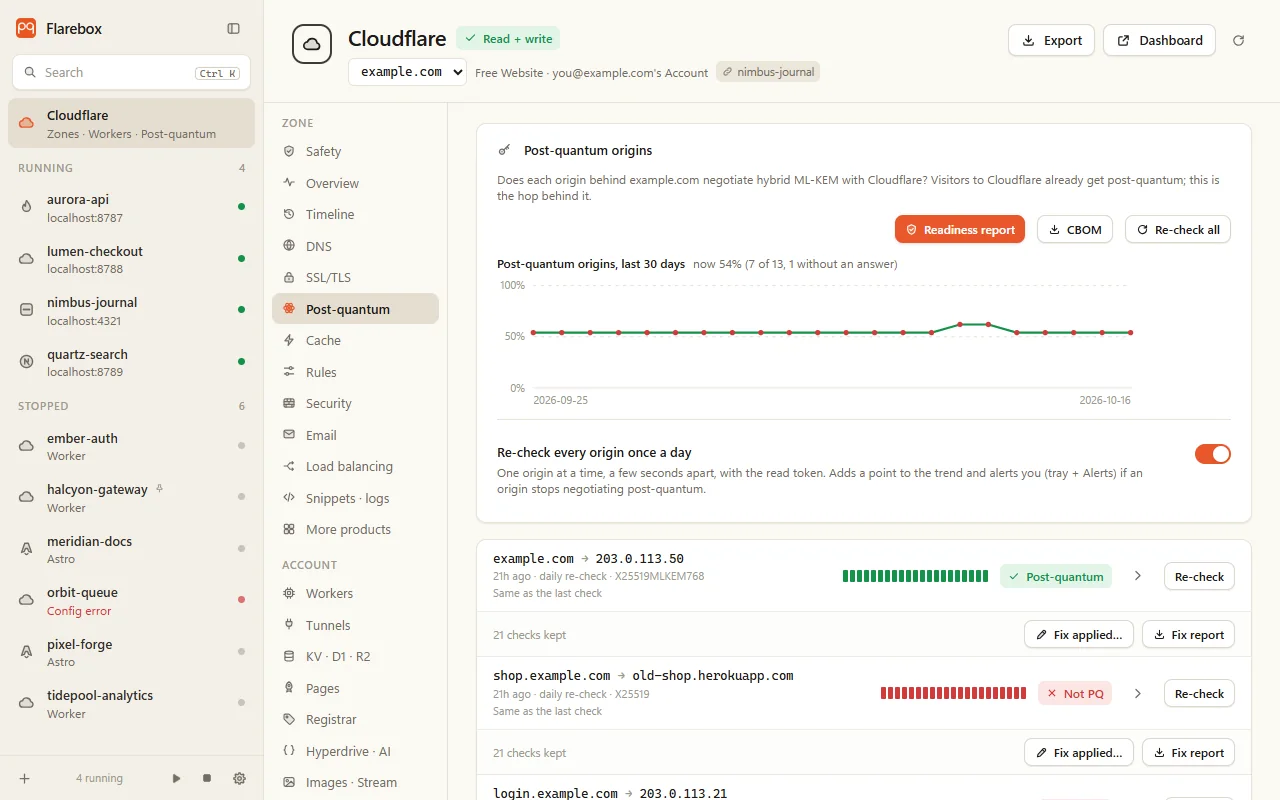
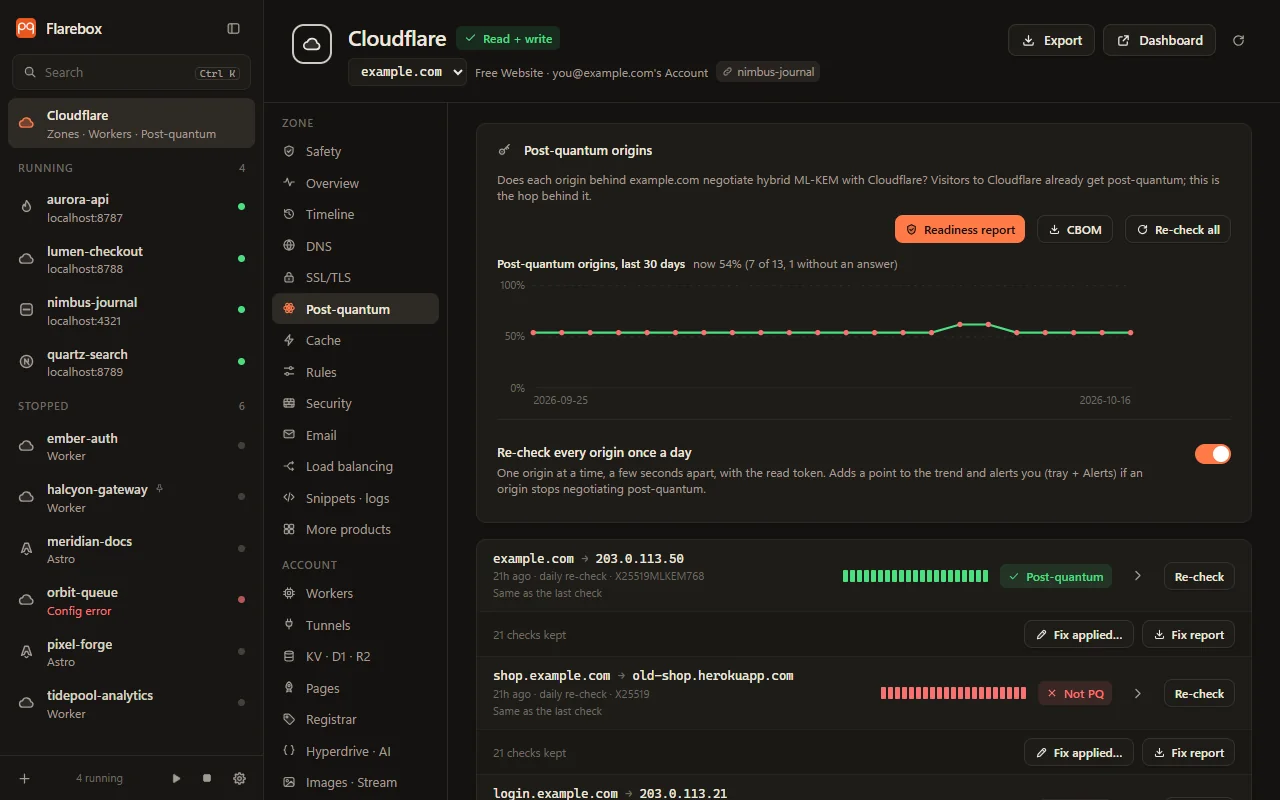
Every origin, and the hop behind Cloudflare
Visitors already reach Cloudflare over post-quantum TLS. Flarebox checks the hop from Cloudflare to each of your servers once a day, keeps the trend, and alerts you when one drops back to classical.
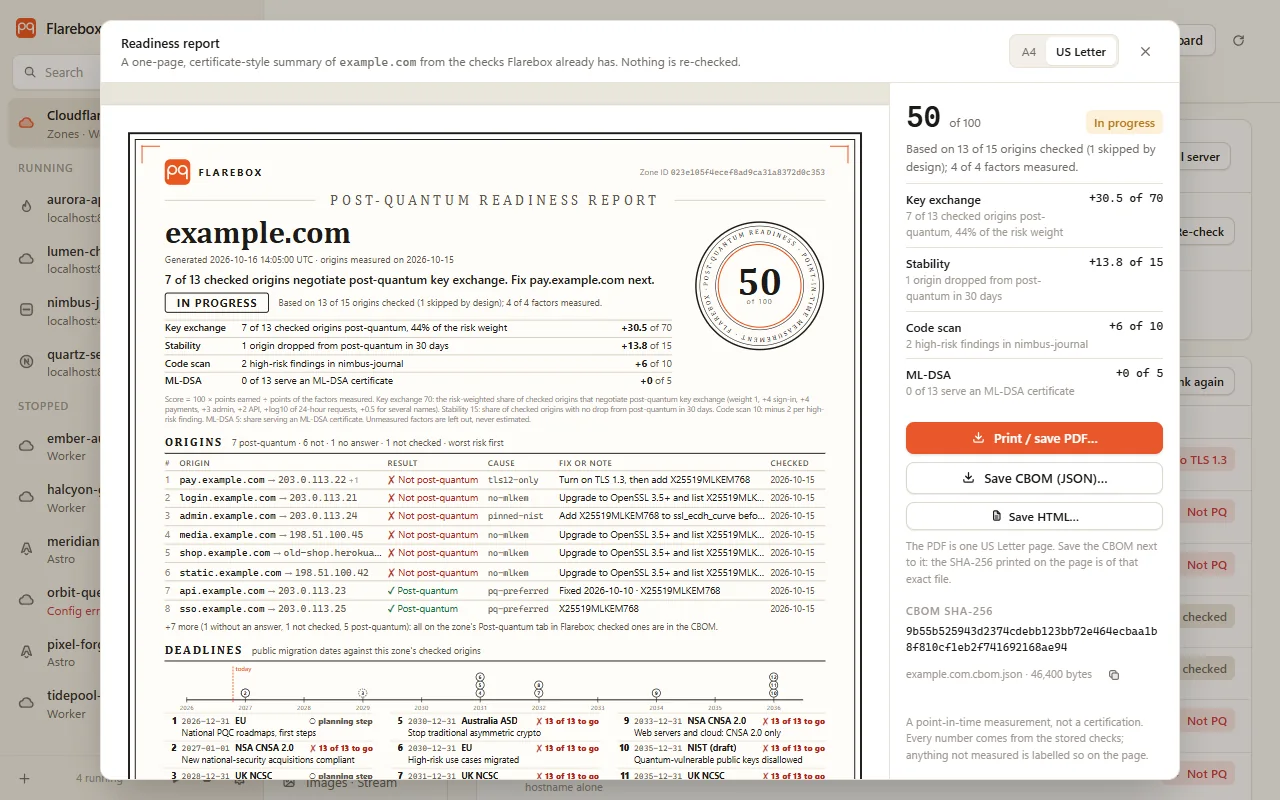
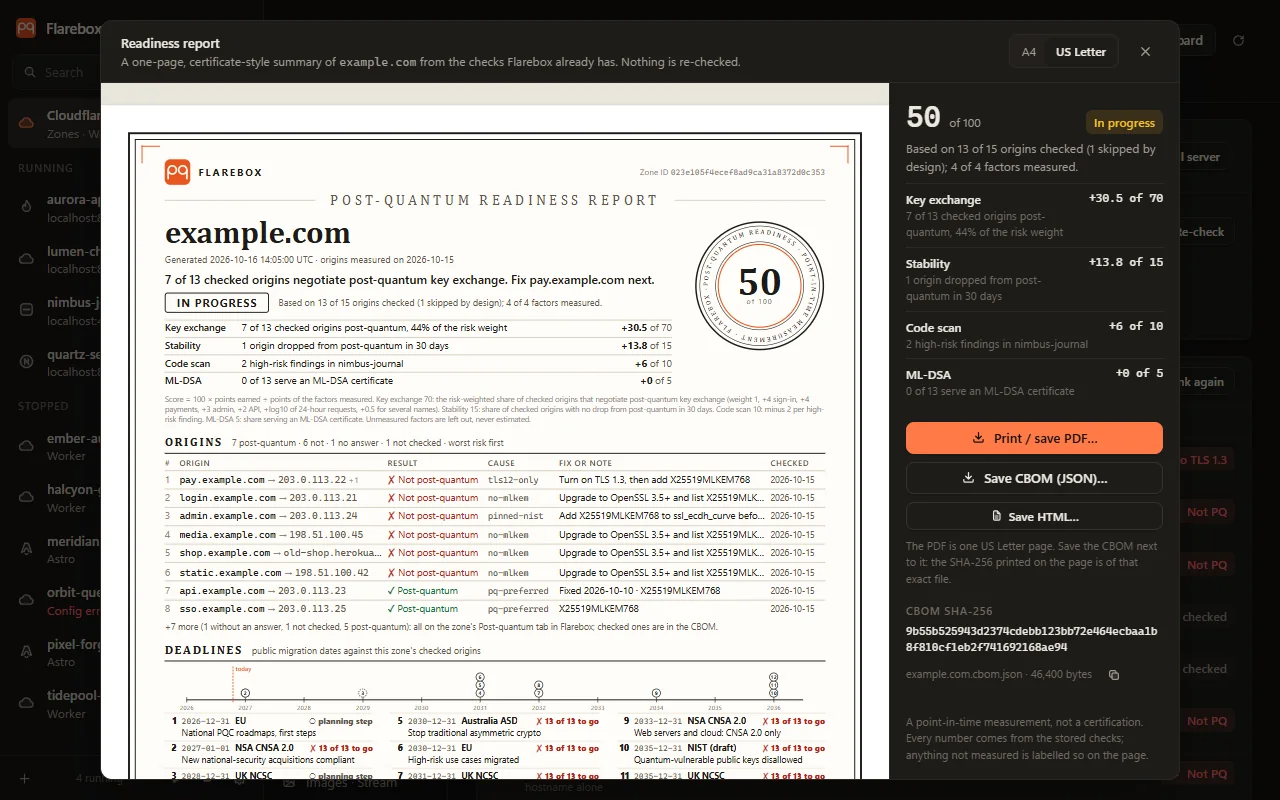
One page per zone: what was checked, what negotiated post-quantum, the cause and fix for the rest, and how far each one is from the NSA, EU and UK deadlines. Saved with a CBOM whose SHA-256 is printed on the page.
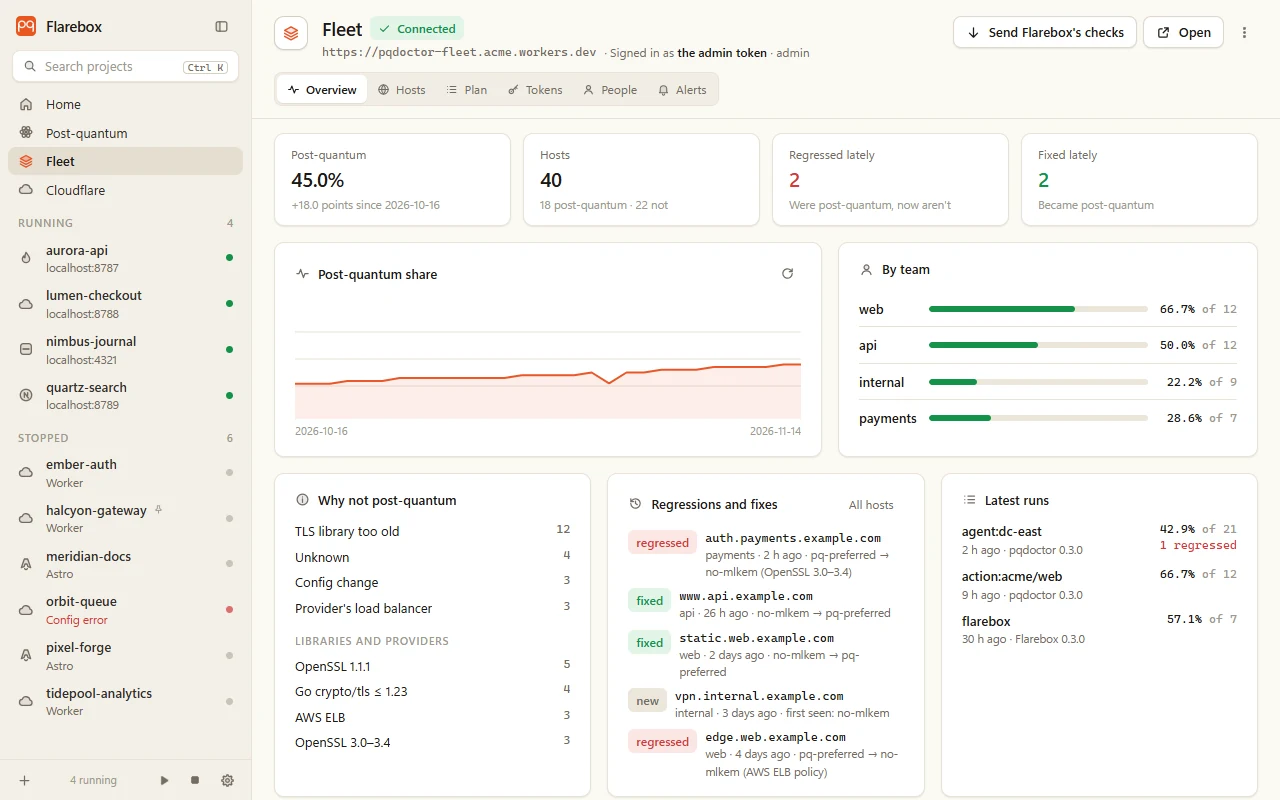
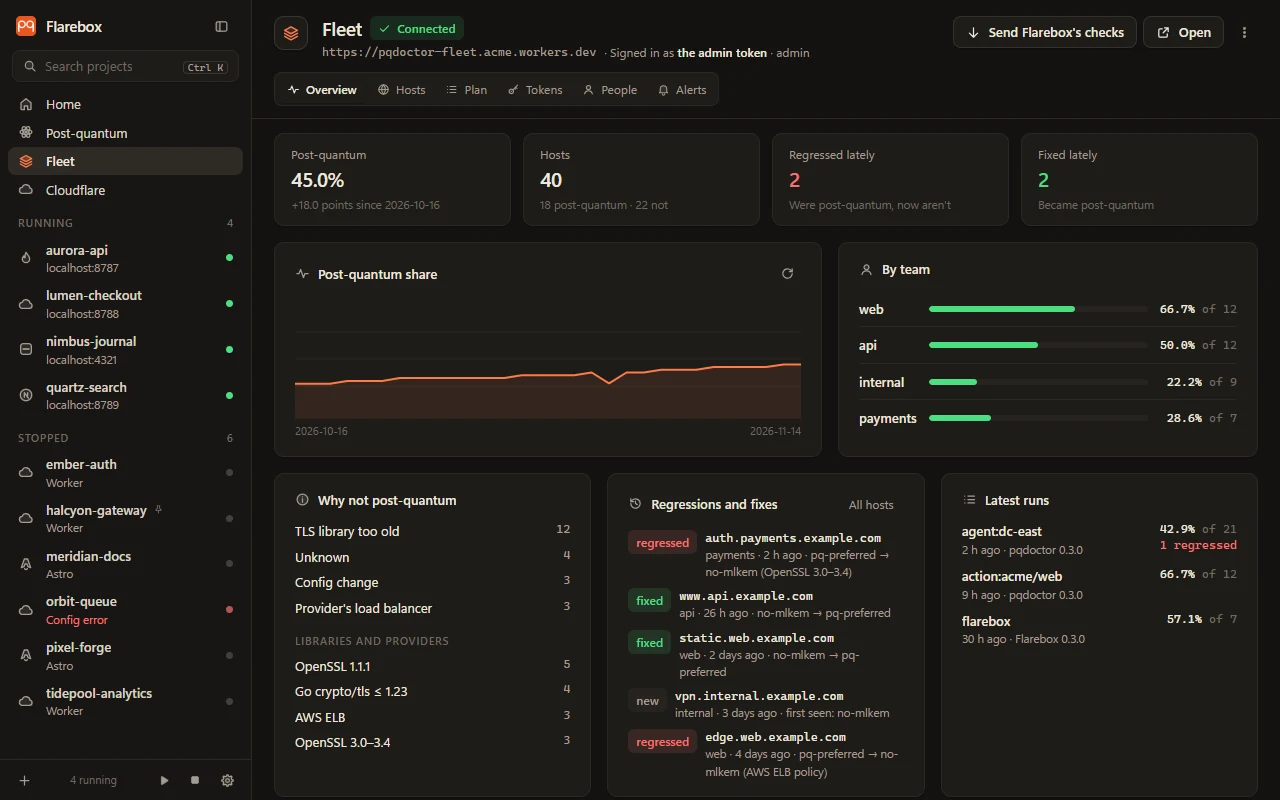
Every check from agents, CI and Flarebox, by team and over time, with regressions, the causes behind them, owners and alerts. The fleet is a Worker and a D1 database on your own Cloudflare account: nobody else runs it or sees the data.
Deploy to your Cloudflare account from the app, split traffic between versions, roll back a deployment, and manage secrets that Flarebox never shows or stores.
Post-quantum key exchange works today. Post-quantum certificates don’t yet, for everyone. We issued real ML-DSA chains and connected every client stack we could install.
pqdoctor proxy and OpenSSL 3.5.5 as servers gave the same results. Classical chains passed on all 12. The proxy and pqdoctor pki are in pqdoctor 0.5.0.
Yes. pqdoctor and Flarebox are free to use, including the GitHub Action and Fleet. They are independent projects: pqdoctor is published as prebuilt binaries on npm and apt.pqdoctor.com, and Flarebox as installers for Windows and Linux from pqdoctor.com.
Because traffic recorded today can be decrypted later: harvest now, decrypt later. Anything that has to stay secret for years is exposed by every classical handshake made from now on. Key exchange is the part that protects it, and it’s the part that’s ready to switch today.
My site is behind Cloudflare. Isn’t it post-quantum already?
The visitor’s connection to Cloudflare is. The connection from Cloudflare to your origin is a separate TLS connection, and it’s post-quantum only if your origin’s TLS library and configuration allow it. That hop is what pqdoctor and Flarebox check. The same goes for any CDN or load balancer.
pqdoctor is handshake-only: it reads each server’s first reply, never completes a TLS handshake and never sends application data. The certificate check completes one key exchange to read the certificate, then hangs up before Finished. A default check of one address is about 15 short connections for a post-quantum server, up to about 28 for one that isn’t, one of them a HEAD request. Scanning other people’s servers is still your responsibility, so keep the default pacing and honour opt-outs.
No. pqdoctor stores only what you ask for: scan results, history or a CBOM, on your machine. Nothing is sent unless you push to your own Fleet or open tickets on GitHub yourself. Every byte it sends to a server is documented.
No. Everything works from outside. For internal names, or origins that only accept your CDN, the agent runs the same checks on a schedule from inside your network.